A Shared Room Works Best When It Has More Than One Shape
A flexible shared room helps neighbours use one space for conversation, quiet company and practical tasks, with furniture arrangements that adapt without fuss.
How can one shared room host a neighbourly conversation, a quiet visit and a practical task without making any of them feel out of place? A flexible shared room can do all three when its furniture supports different activities and can be reset without confusion. A clear route, a few useful surfaces and movable chairs matter more than an elaborate floor plan.
Plan for different uses
Rows facing one point suit a talk but can make a casual visit feel formal. A circle encourages conversation, yet it may not suit people sorting donated books or filling in a community noticeboard. Tables across the centre can support a shared task while leaving little room for a group to sit together.
Rather than assigning a permanent purpose to each corner, think about the activities the room regularly needs to accommodate. A table near a wall might hold craft materials or a sign-in sheet. A compact cluster of chairs can support conversation, while open floor space allows people to carry boxes or rearrange furniture for a meeting.
Keep these uses compatible. A room should not need a complete overhaul every time one activity gives way to another.
Make furniture useful
Choose furniture for what it lets people do, not for how many distinct zones it appears to create. A stable table gives people somewhere to set down cups, papers or shared materials. Chairs that are straightforward to lift and return make it easier to adjust the layout between activities.
Keep a simple route from the entrance to the main seating and shared surfaces. Avoid placing a table where people carrying supplies must squeeze past seated neighbours. If furniture is heavy, fixed, or subject to building rules, check with the room’s steward before moving it; ask a qualified professional if access or safety requirements are unclear.
Leave enough open space for the room’s ordinary tasks, such as setting out refreshments or putting away equipment. Store spare chairs where they are easy to reach without turning a useful corner into a pile of unused furniture.
Set a room rhythm
A familiar routine helps different groups use the same room without inheriting a confusing mess. The details will depend on who opens and closes the space and what activities are planned.
- Before use: Check whether the planned activity needs a table, chairs or open floor space. If supplies will be shared, place them on a surface people can reach; if the room needs to remain clear for another purpose, keep materials together and bring them out only as needed.
- At set-up: Put furniture in the arrangement that serves the first activity. If people will work together around papers or materials, bring the relevant surface within reach; if the activity is conversational, arrange chairs so people can face one another without blocking the route through the room.
- During a changeover: Notice whether an incoming activity needs a different surface or more open floor space. If so, move only the furniture that conflicts with that use; if the current arrangement already works, leave it in place.
- After use: Check that shared equipment is returned and surfaces are ready for the next group. If an item has no clear storage place, ask the room’s steward where it belongs rather than leaving it in a passage or on a working surface.
- When a problem recurs: Ask users about one specific inconvenience, such as not having somewhere to put materials. If several people identify the same obstacle, try one small layout change; if the issue is about access or building rules, consult the responsible person before adjusting the room.
- Before closing: Look at the route from the door and the places where people need to sit or work. If a chair or stored item obstructs either, return it to its proper place; if the layout is already clear, avoid moving furniture simply for the sake of change.
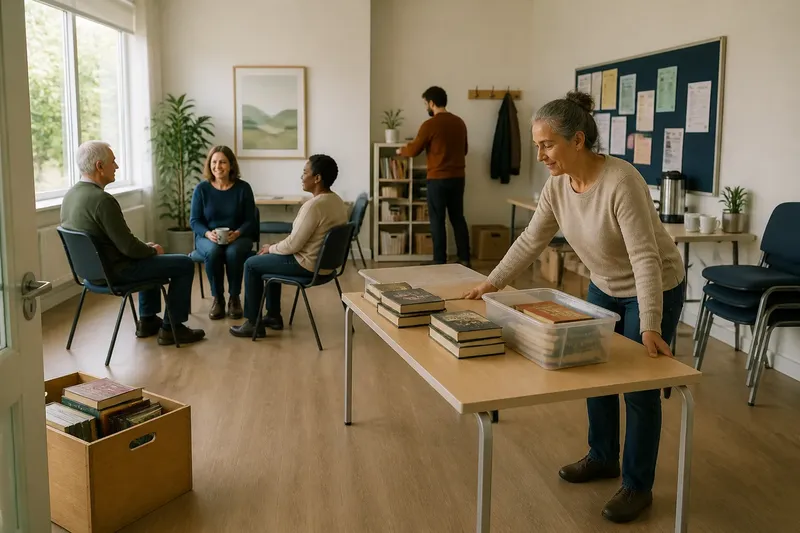
Imagine a neighbourhood group is due to sort donated books after a small conversation gathering. The starting arrangement is a circle of chairs, a table against the wall, and a box of books beside the entrance; those are invented details for this example. The organiser first checks that the door route is open, then moves the table to a position where several people can reach it and shifts the chairs to the room’s edge. The expected result is a clear working surface and open floor space; if the table blocks the route, the organiser returns it to the wall and sorts the books in smaller batches there instead.
Compare possible layouts
Different arrangements solve different problems, so there is no need to force one layout to serve every occasion.
- Circle of chairs: Useful when conversation is the main activity. If people need a shared surface, add a small table within reach; if the circle leaves too little room for other tasks, open one side or use a compact cluster instead.
- Table with chairs: Useful for crafts, paperwork or sorting shared materials. If people are struggling to reach the centre, clear some items or divide the work across the table; if the table limits movement, move it to the edge and use smaller surfaces where available.
- Open centre: Useful when people need to carry supplies or rearrange the room. If the space feels unanchored for conversation, bring a few chairs together; if the floor is needed for a group activity, keep furniture to the perimeter.
Choose the arrangement that supports the next activity while leaving the room ready for its other regular uses.
When layouts need adjustment?
How can a room serve conversation and tasks?
Keep a small seating arrangement and a useful work surface available, rather than filling the room with furniture for either activity alone. If a session needs more space, move only the pieces that interfere and return them afterwards.
Where should shared materials go?
Place them on a surface that does not obstruct the entrance or a working route. If the materials are not in use, store them together in the agreed location so the next group can find them without searching.
What if the room has fixed furniture?
Work with the arrangement that is permitted and adapt smaller movable items around it. If a fixed feature creates an access or safety concern, raise it with the building manager rather than attempting an unauthorised alteration.
How can groups share the room fairly?
Agree on a simple reset routine that returns common furniture and supplies to known places. If groups need different arrangements, note what should be put back after each use so the next activity does not begin with someone else’s unfinished set-up.
Keep changes manageable
A room used by different neighbours does not need a fresh design for every gathering. A basic arrangement that most groups can understand, plus a few movable pieces, is easier to maintain than a complicated system with many boundaries.
Ask about a particular point of friction rather than inviting an abstract redesign. If people often lack a surface for shared materials, try moving a table closer to the activity; if that narrows the route, return it and use a smaller work area. The visible result will help the group decide which arrangement is more workable.
A flexible shared room is easiest to share when each group can make a modest change and leave the next one a usable space. Keep the route clear, return common items to their agreed places and let the next activity—not a rigid floor plan—determine which pieces move.